
Photography © Jonas Bjerre-Poulsen
Set within the meadows of Ästad Vingård on Sweden's west coast, Michelin-starred ÄNG is less a restaurant and more a carefully choreographed experience, where the architecture and surroundings become as much a part of the experience as the food itself.
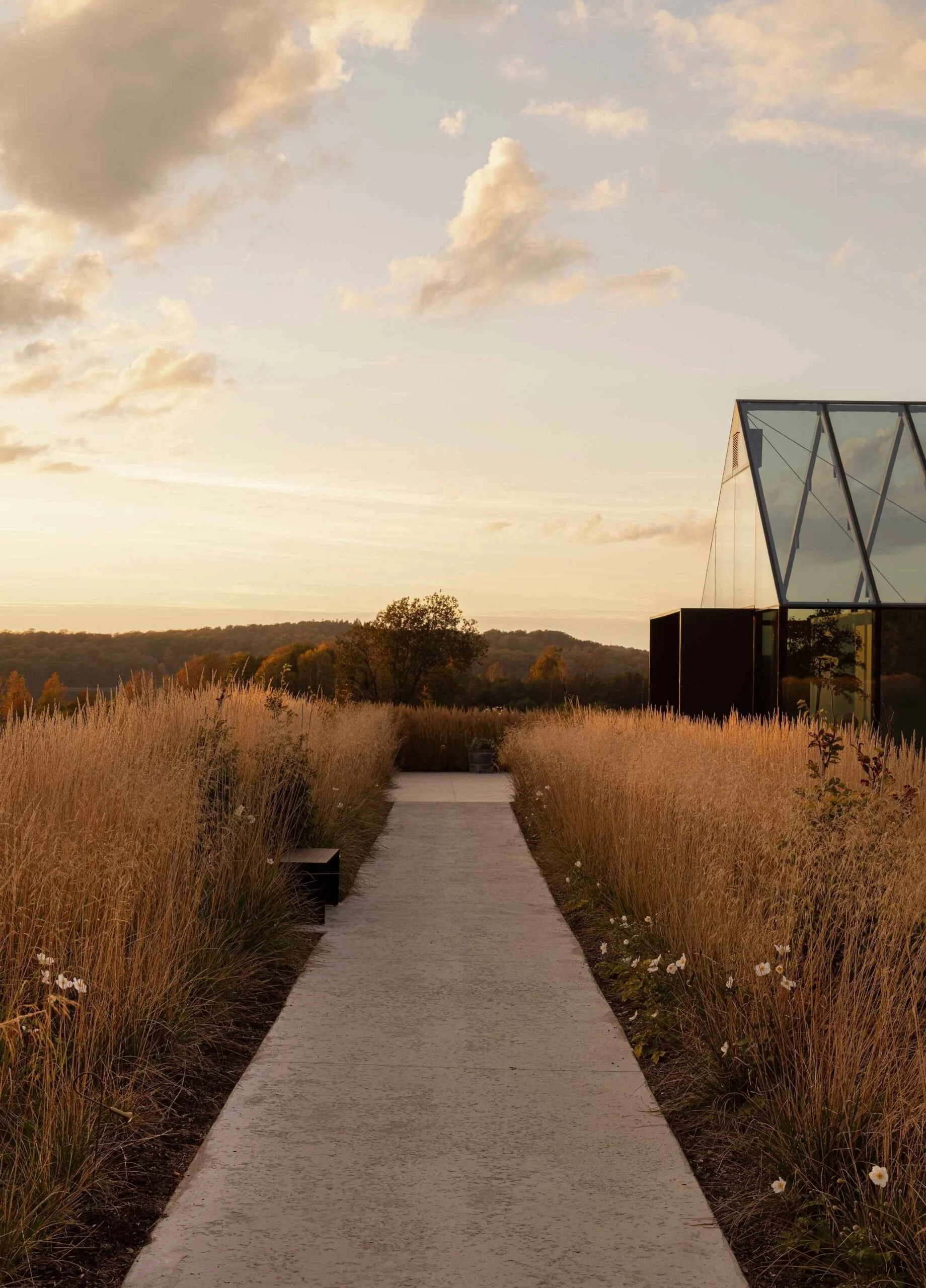
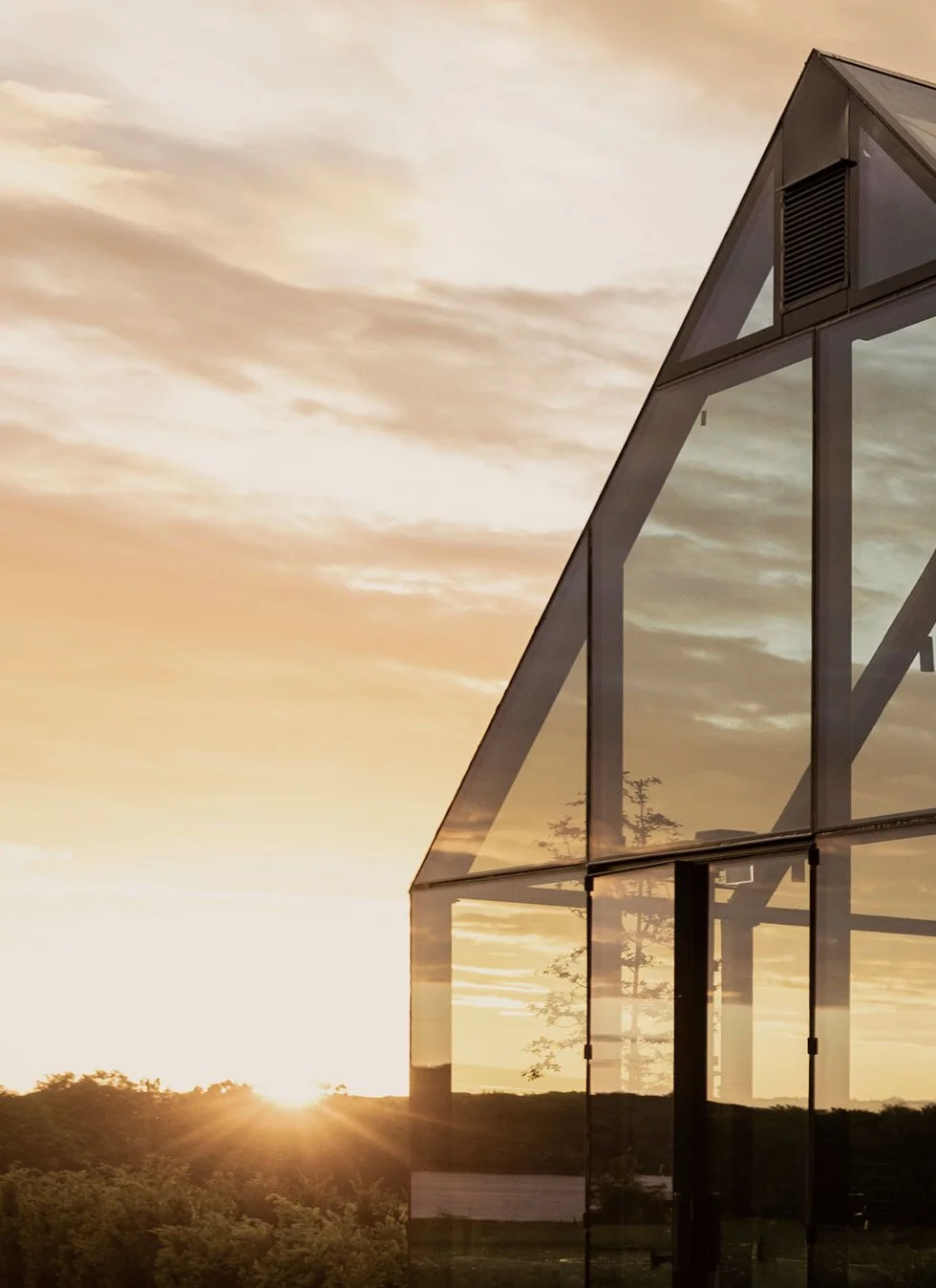
A narrow path cuts through a meadow of tall grasses, leading towards a minimal glass structure placed carefully in the rural landscape. Designed by none other than Copenhagen-based Norm Architects, the structure looks much like a contemporary greenhouse, except the traditional steel framework has been positioned on the inside, rather than the outside, to leave an uninterrupted glass exterior that reflects the surrounding fields and makes the building blend into the scenery.
The restaurant opened in its current home in 2022, following the success of its original location at Ästad Vingård, a family-run vineyard in Halland, around 90 minutes south of Gothenburg. Established on the site of a former dairy farm, the vineyard has become a destination for food, wine and hospitality, with ÄNG receiving its first Michelin star in 2021.
Despite the striking glasshouse architecture, most of the restaurant itself is actually concealed beneath the meadow, with the glasshouse serving as the entrance and first setting for the evening. Here, guests are welcomed with drinks and a selection of small dishes before descending by lift into the wine cellar and the main dining room below ground. The tasting menu is served in stages across the different spaces, with the evening typically lasting around four hours.
This movement from light into shadow and back again is entirely intentional. Jonas Bjerre-Poulsen of Norm Architects describes it as a play on chiaroscuro. When the light fades and sight weakens, the other senses sharpen, so guests find themselves paying more attention to sound, scent, taste and touch. A dinner that might otherwise mean hours in one chair becomes a series of atmospheres, each one renewing your attention for the next.
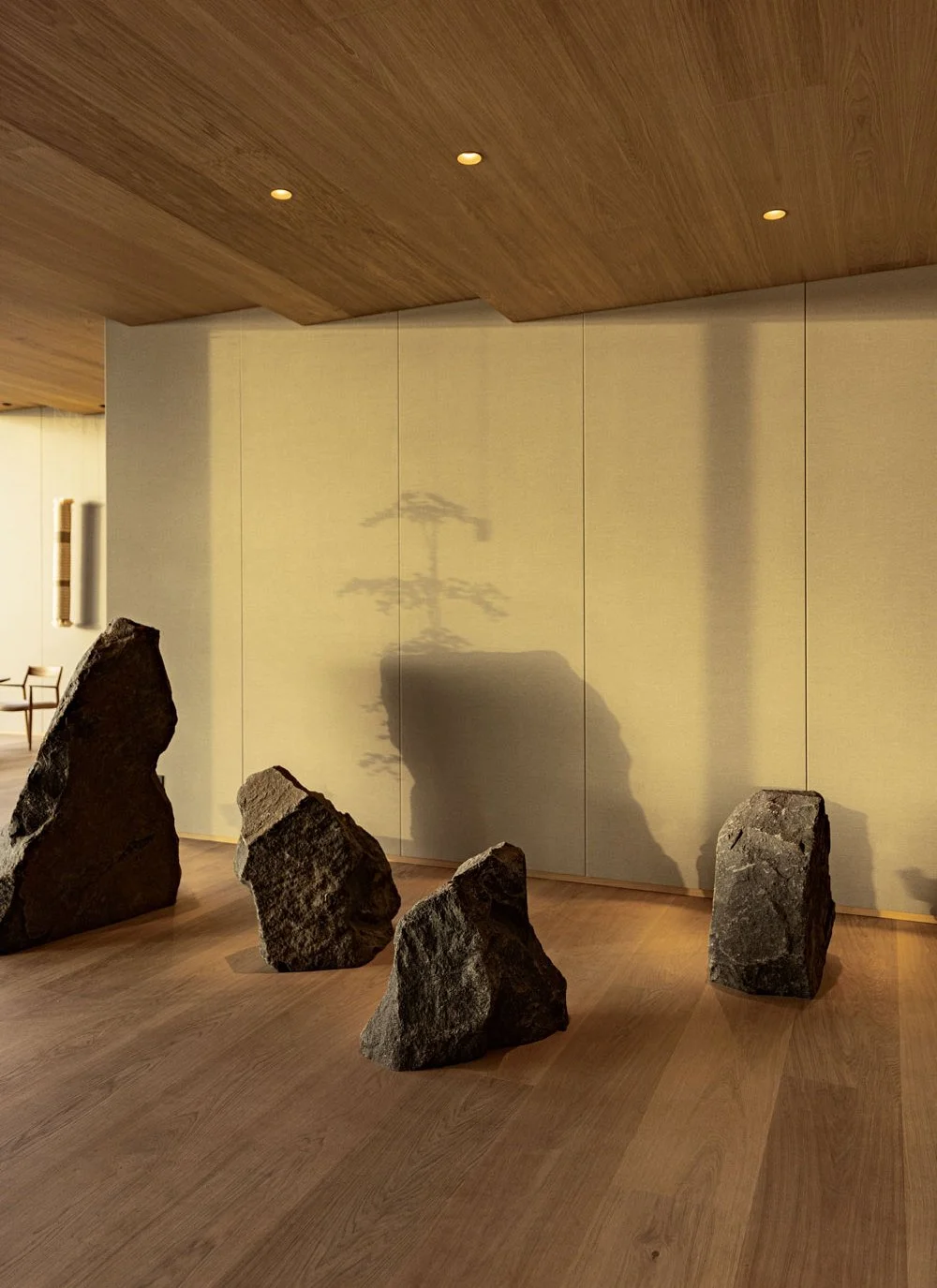
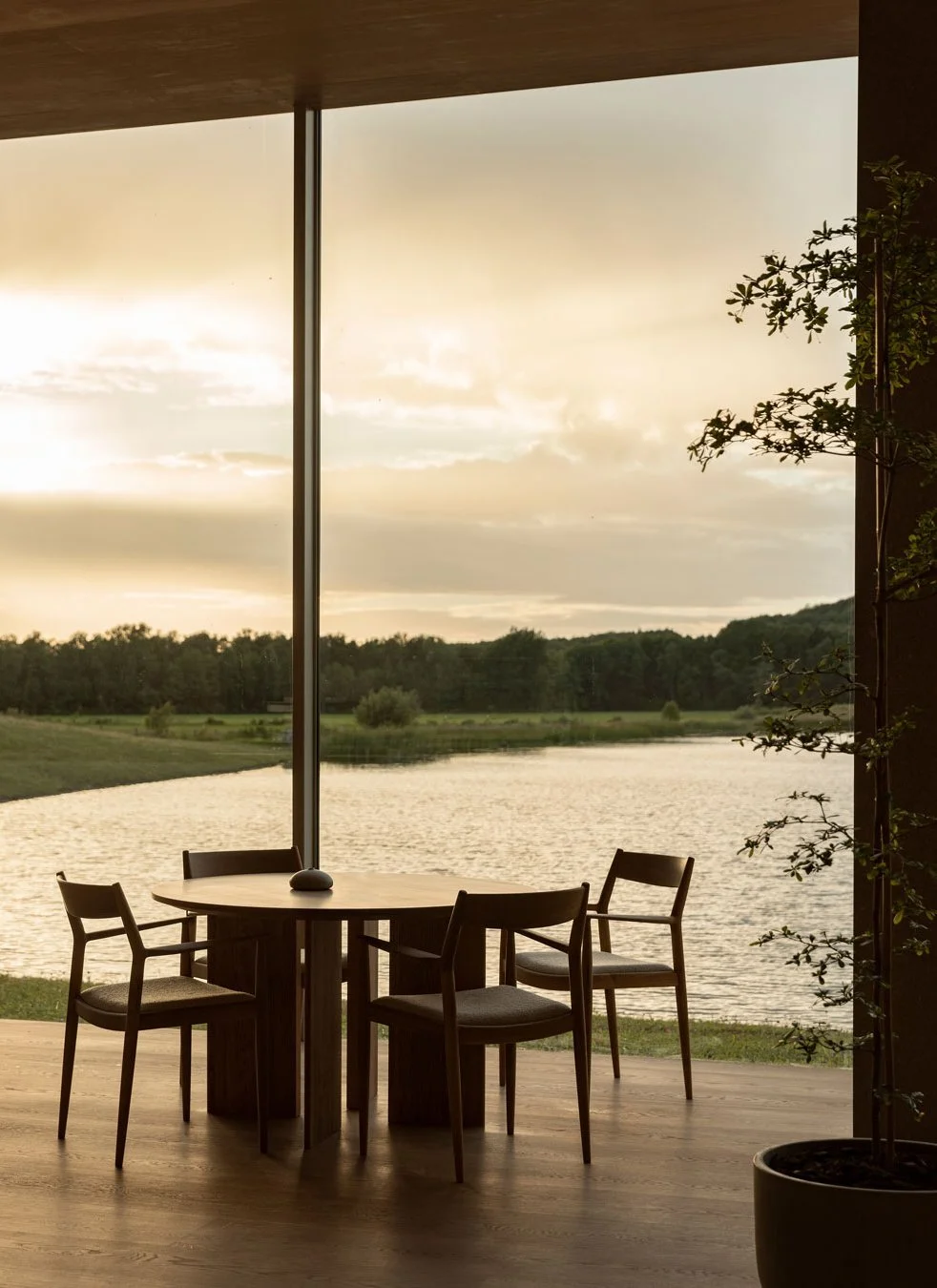
Everything here is considered as one, with architecture, food, materials, sound and views all part of a single composition. The interior has a distinctly Japanese sensibility, yet most of the hands that shaped it are Nordic. The Norwegian artist Anders Pfeffer Gjengedal, known as Løvfall, made seven sculptures in wood and stone for the dining spaces. The Danish designer Sara Martinsen walked into the surrounding forest to gather materials for her tactile artworks. Hand-built and wheel-thrown ceramics by Ulla Bang and Viki Weiland fill the kitchen shelves, and the furniture, by Karimoku Case Study, includes solid oak pieces made especially for ÄNG. Even the stones have been chosen with care. They were brought from a quarry in Växjö and arranged as miniature landscapes, in the spirit of Japanese karesansui gardens.
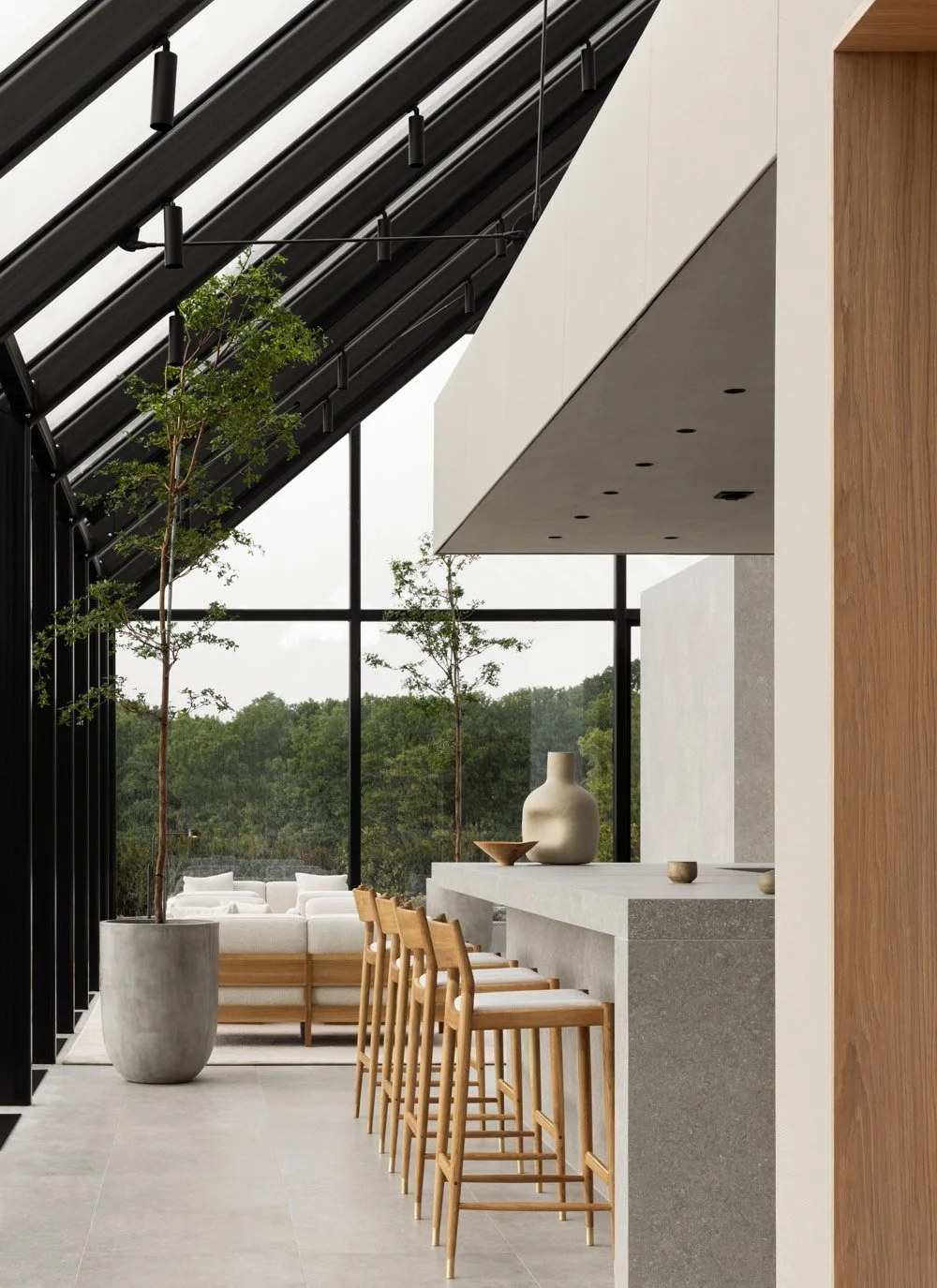
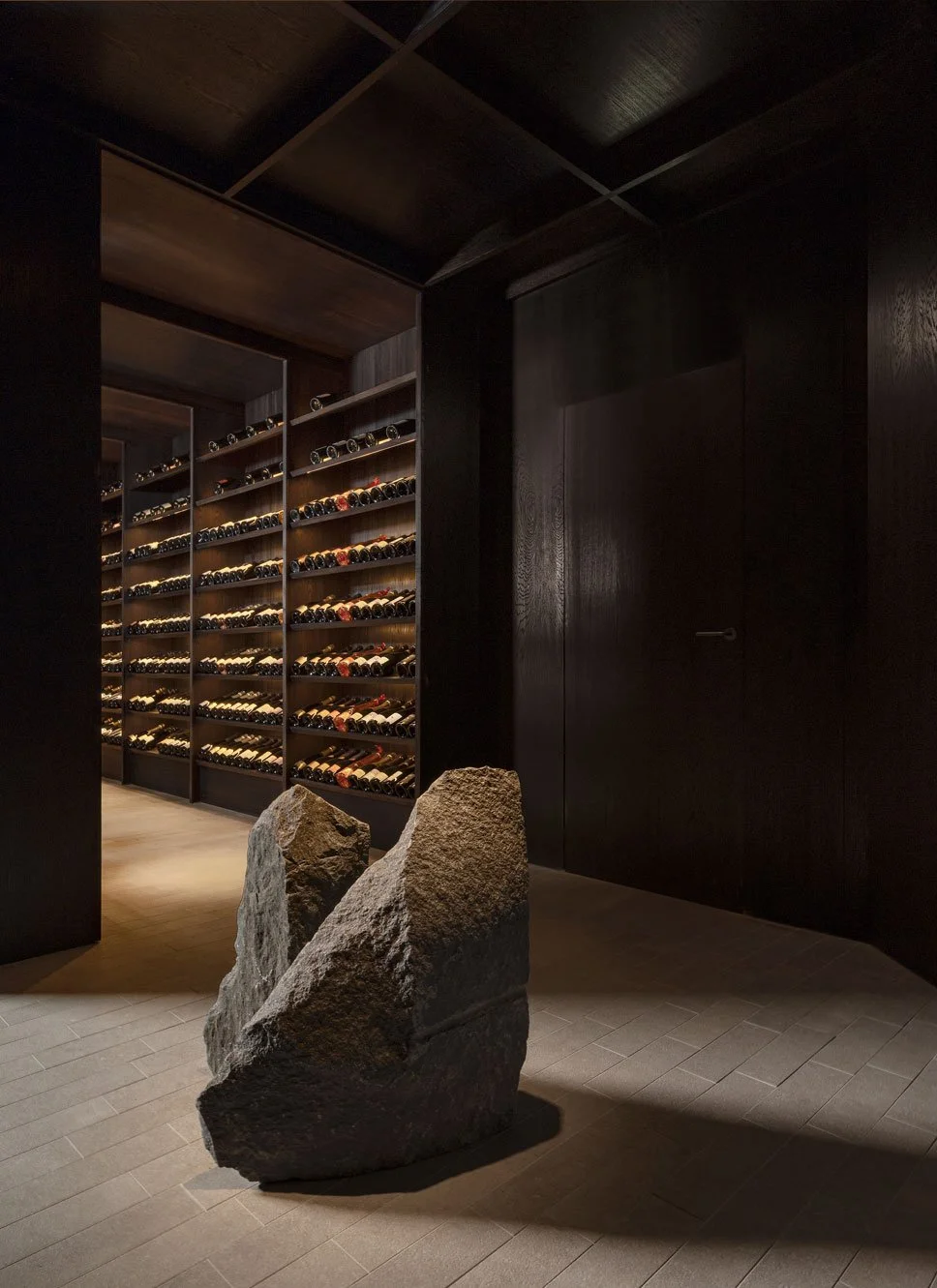
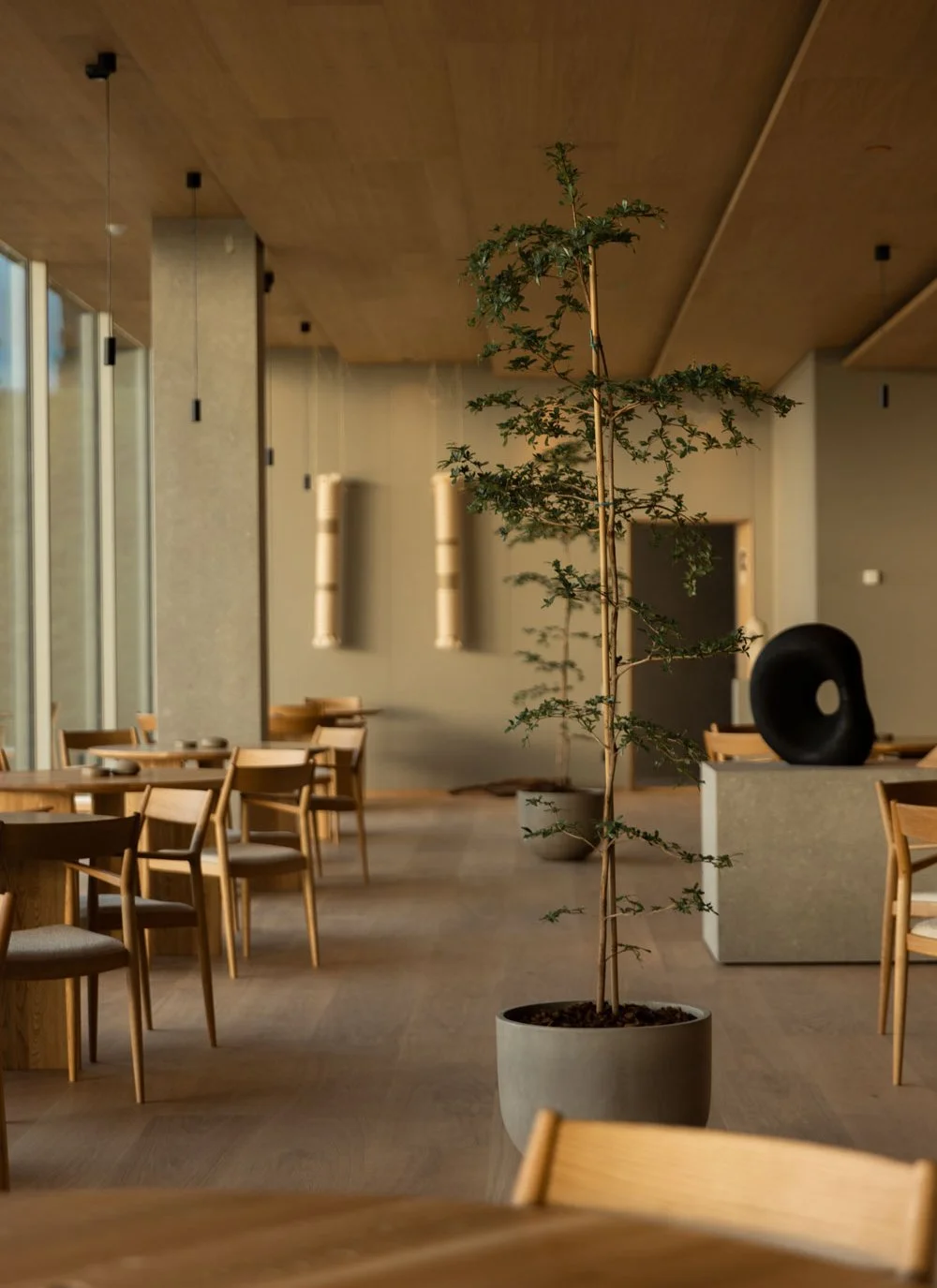
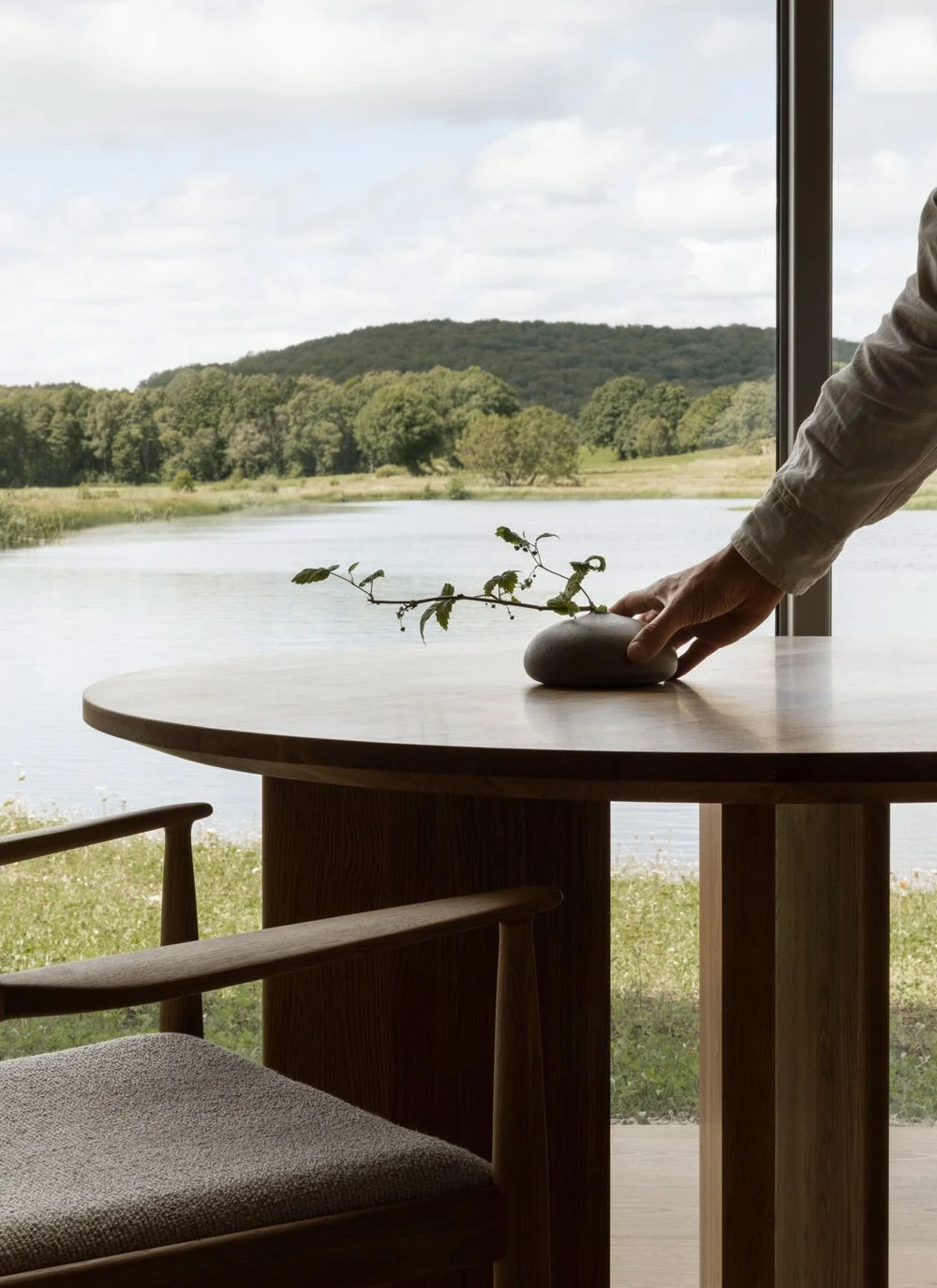
The architecture makes use of the site's natural topography, with the lower level opening towards the surrounding wetlands and lake, blurring the boundary between inside and outside.
For the interiors, Norm Architects worked with a palette of natural stone, timber flooring by Danish manufacturer Dinesen, of course, and different natural and muted textured wall finishes throughout. Everything deliberately pared back, with the detailing and craftsmanship taking precedence over any unnecessary added decoration.
The restaurant's approach to food is just as considered. Led by chef Filip Gamzell and General Manager Ann-Catrine Johansson, ÄNG works closely with producers from the surrounding Halland region, using seasonal vegetables, herbs, seafood and locally sourced ingredients. The tasting menu changes with availability, with preservation and fermentation allowing the kitchen to make use of ingredients beyond their immediate season. The vineyard's own sparkling wines also feature alongside an extensive international wine selection.
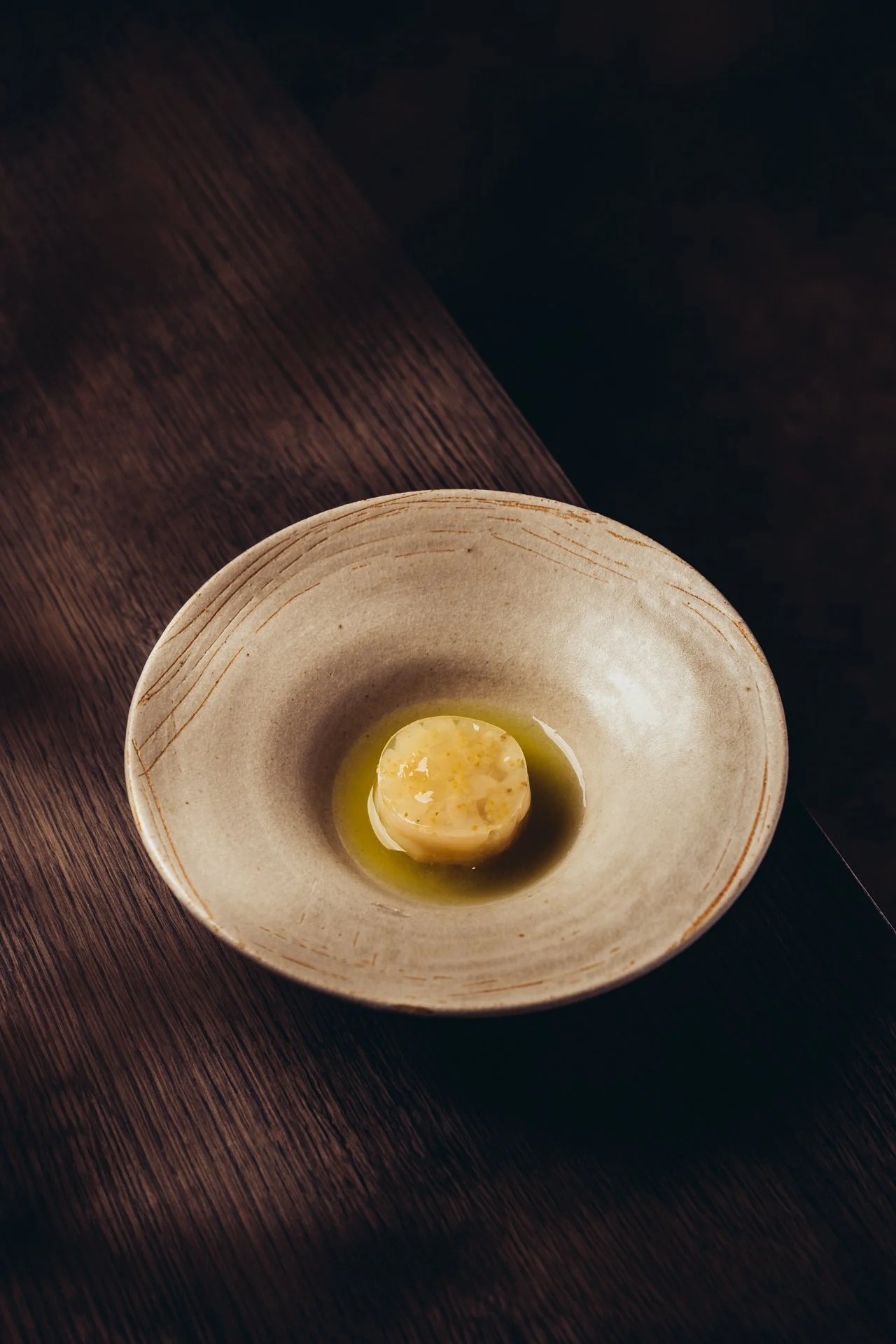
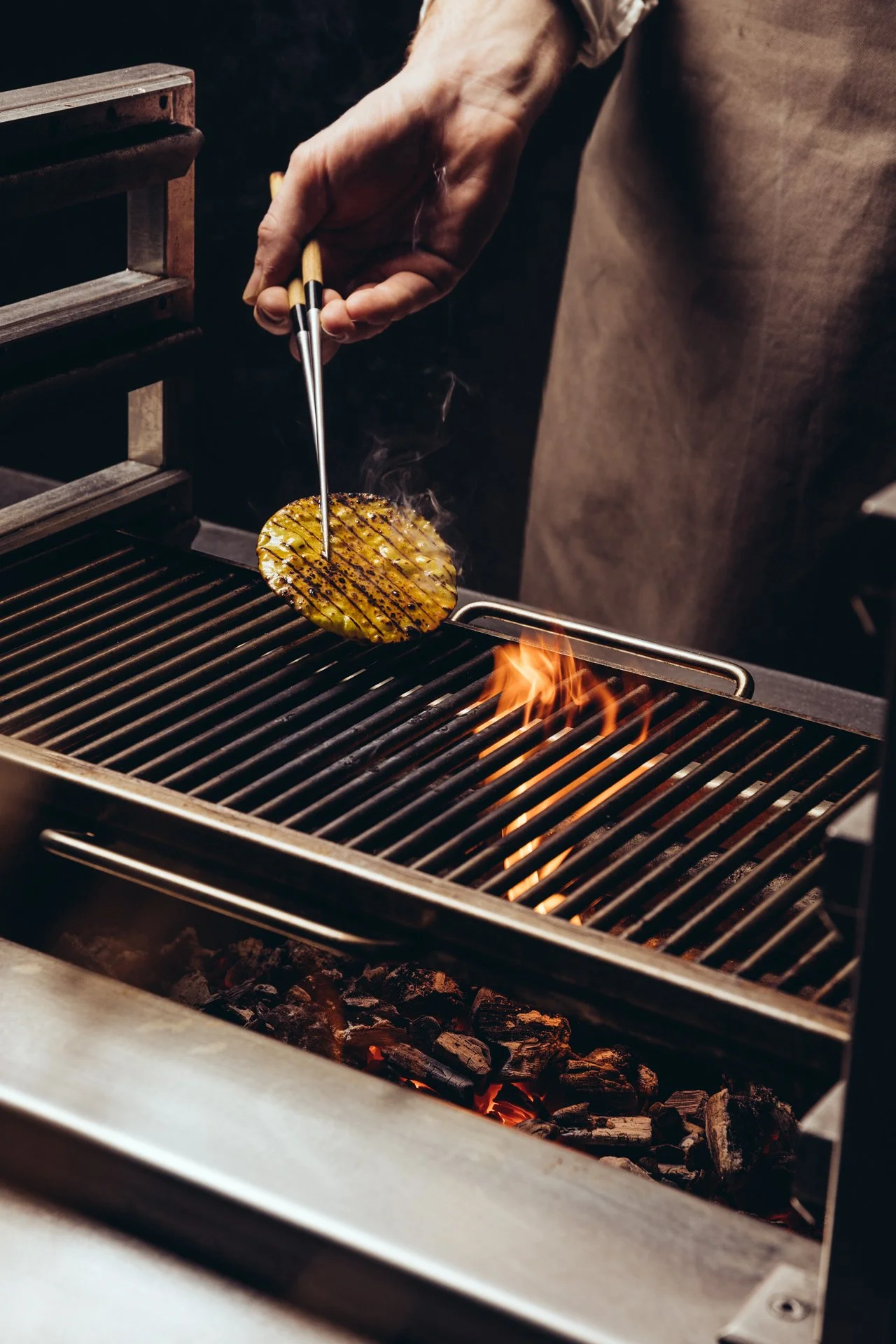
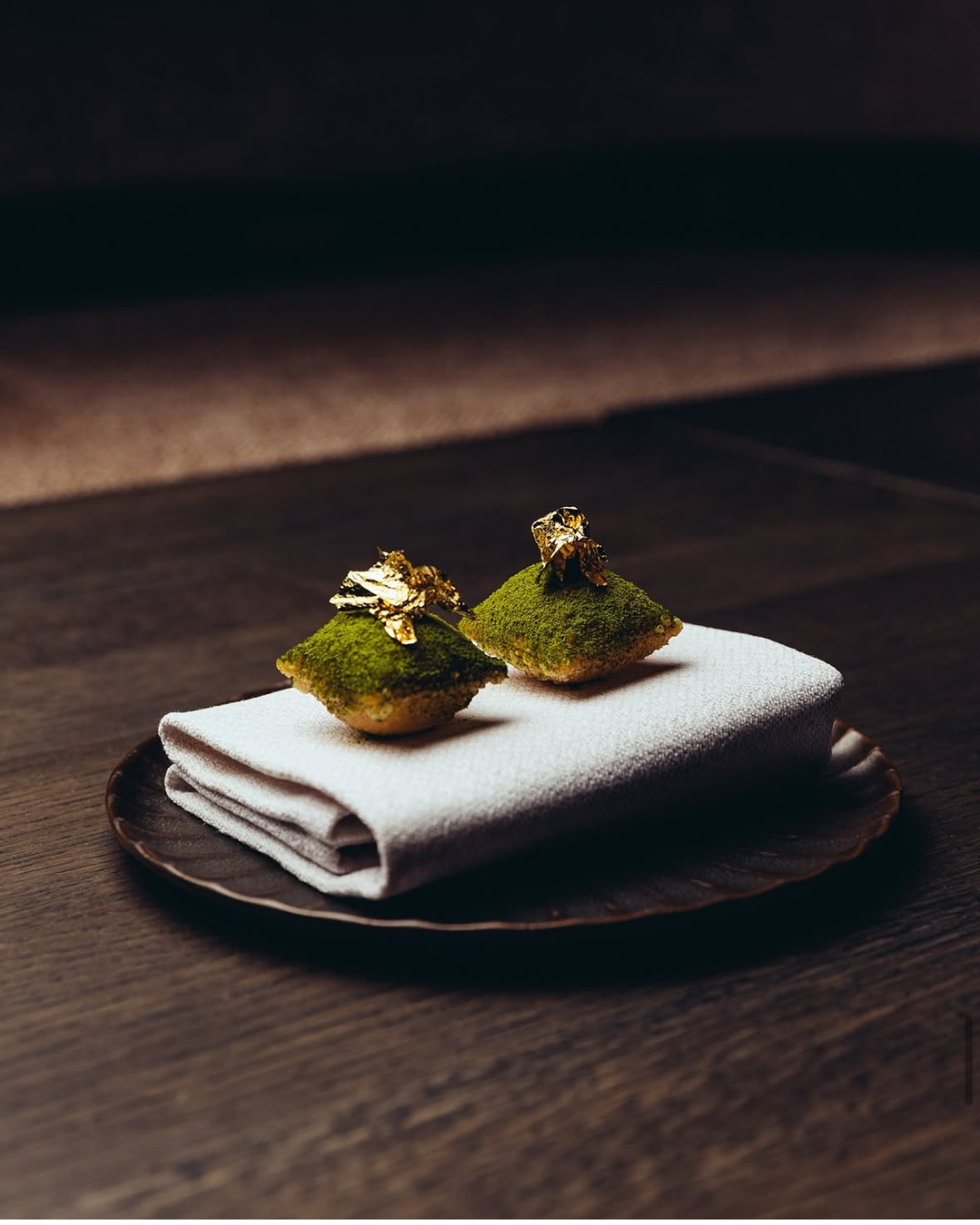
So what makes ÄNG different from the many other Scandinavian restaurants dedicated to seasonal, locally sourced cuisine? The architecture, and how it’s so meticulously planned around the entire dining experience. Rather than remaining in one dining room, guests move through a sequence of different spaces, beginning with the approach through the meadow and the light-filled, open glasshouse, before descending into the dark and intimate wine cellar and eventually settling into the main dining room for the remainder of the evening. The architecture becomes an integral part of the culinary experience, engaging more senses than just your taste buds.
So even though the food remains the main reason to come, the architecture, natural landscape and sensory choreography that accompany it make ÄNG a restaurant worth travelling for.